What are the side effects of CBN? Learn about common reactions, drug interactions, CBN vs THC safety, and who should avoid it. Medically reviewed.

Key Takeaways
Worried CBN might leave you groggy or cause unexpected issues when using it for better sleep? You're right to question—with growing excitement and consumer adoption of cannabinoids, it's important to know the safety profile before diving in. This article explores CBN side effects, safety data from recent trials (where 94% reported only mild effects), and protocols to minimize them.
For a comprehensive overview of how this compound functions, check out our guide for What is CBN?*
94%
mild effects only in clinical trials
~10%
as potent as THC
20mg
max daily dose considered safe

CBN (cannabinol) is a cannabinoid that interacts with the body's receptors to cause drowsiness, sedation, and feelings of relaxation.
CBN is essentially "aged" THC. It forms when THC is exposed to oxygen and light over time, degrading into a less potent compound. Unlike CBD, which works indirectly on receptors, CBN binds directly to your cannabinoid receptors (CB1 and CB2), much like a key in a lock.
However, the "turn" of that key is much weaker. This unique mechanism allows CBN to promote physical relaxation and sedation without the intense cerebral "high" of THC. It occupies a middle ground: more physically perceptible than CBD, but significantly less disorienting than THC
Most side effects of CBN are mild, temporary, and dose-dependent. Because CBN is primarily used as a sleep aid, the most common "side effect"—drowsiness—is actually the intended result. However, unwanted reactions can occur, especially if you take too much too quickly.
This is the double-edged sword of CBN. Excessive drowsiness usually happens when you take CBN too late at night. If you wake up feeling "foggy," it's a sign your liver hasn't fully metabolized the CBN yet.
"Cottonmouth" happens because CB receptors in your salivary glands temporarily reduce saliva production. Dizziness is less common and usually linked to a mild, temporary drop in blood pressure.
While THC triggers the "munchies," CBN's effect on appetite is much subtler. You generally won't feel an urge to raid the fridge, though some users report a mild increase in hunger.

CBN works by interacting with your endocannabinoid system (ECS).
When you take CBN, it acts like a biological brake pedal. By binding weakly to CB1 receptors, it signals your body to downshift from a state of alertness to a state of rest. This direct interaction is why CBN is often felt physically—heavy eyelids, calmness, and muscle relaxation.
What Medications Should Not Be Taken with CBN? You need to be careful here. CBN is metabolized by the liver using the CYP450 enzyme system. This is the same pathway used to process over 60% of prescription drugs.
When CBN occupies these enzymes, other drugs "wait in line," potentially causing serious health issues that you certainly want to avoid.
Blood thinners (like Warfarin)
★★★ High RiskSedatives and sleep medications (Ambien, Benzos)
★★ Moderate RiskAnti-anxiety medications
★★ Moderate RiskCertain antidepressants
★★ Moderate RiskHeart medications
★★ Moderate RiskIf your medication has a "grapefruit warning" on the bottle, it likely interacts with CBN. Please consult your doctor before ingesting CBN and any medication with a grapefruit warning.

Cannabinoids can cross the placental barrier and are excreted in breast milk. There is insufficient safety data for developing infants.

Compromised organs cannot filter the cannabinoid effectively, leading to bioaccumulation.

Lack of pediatric safety data.
Is CBN Safer Than CBD? Both have strong safety profiles. CBD has more clinical research backing it (including FDA approval for Epidiolex), while CBN is newer to clinical trials but shows no major toxicity signals. The primary difference is that CBN is sedating, while CBD is generally non-sedating at standard doses.
Does CBN Get You High? The short answer is: No, not in the traditional sense. At standard doses (8-20mg), CBN does not produce a "high." However, because it is a degradation product of THC, it is physically relaxing. Some users report a sensation of "body heaviness" or mild euphoria, particularly at high doses (20mg+). It is not the disorienting, head-spinning high of THC, but rather a deep physical sedation. You remain clear-headed, but your body feels ready for bed.
Is It Bad to Take CBN Every Day? Current research suggests that daily CBN use up to 20mg per day is likely safe. However, long-term daily data is limited. The main consideration with daily use is tolerance. Like many sleep aids, your body might adapt, requiring higher doses for the same effect. To prevent this, many biohackers recommend cycling your usage—taking CBN for 5 nights and taking 2 nights off, or using it only on particularly stressful nights rather than as a permanent crutch.
Serious adverse events with CBN are extremely rare in healthy adults. The compound does not suppress breathing (like opioids) or cause physical dependency in the same way as prescription sleep aids. However, hypersensitivity is possible. A very small percentage of people may experience heightened anxiety or a rapid heartbeat. This is often a paradoxical reaction—where the sedative causes alertness instead. If you experience palpitations or severe anxiety, discontinue use immediately. Additionally, because CBN is structurally similar to THC, it carries a risk of failing a drug test, which can have serious professional consequences (Kroner et al., 2020).

Mixing with Alcohol: Amplifies sedation to dangerous levels.
Driving After Dosing: Reaction times are slowed even if you don't feel "high".
Inconsistent Timing: Taking it too late causes morning grogginess.
Finding your "sweet spot" is an art. Here is a template you can use to find the best dosage. It's important that you monitor the effectiveness of CBN products for you, and if you have any specific questions to consult your doctor.
Mild Sleeplessness
4mg - 8mg
Moderate Sleeplessness
8mg - 16mg
Advanced Sleeplessness
16mg - 20mg
You can mitigate almost all side effects by controlling the environment and the product. Here is guidance for how to minimize CBN's side effects:
This is the golden rule of cannabinoids. Start with a low dose—even if you think you have a high tolerance from THC or CBD use. CBN hits different receptors. Give your body 3-4 nights at a low dose (4-8mg) to adjust before increasing. This prevents the "CBN hangover" and lets you find the minimum effective dose.
CBN is a tool, not a magic wand. It works best when you set the stage for sleep.
The supplement industry is unregulated, which means "CBN" on the label doesn't guarantee safety. Poorly processed CBN can contain heavy metals, residual solvents from extraction, or illegal levels of THC.
The science on long-term CBN use is still in its infancy. Most studies focus on short-term efficacy for sleep. However, early data and anecdotal evidence from the biohacking community suggest that tolerance can build up over time.
Research indicates that chronic stimulation of CB1 receptors can lead to receptor downregulation—essentially, your body becomes less sensitive to the signal. To maintain effectiveness and safety, we recommend periodic "washout" periods. For example, use CBN during the work week and take weekends off, or use it for 3 weeks and take 1 week off. This keeps your receptors sensitive and effective (Anderson et al., 2024).
As of 2026, CBN is considered generally safe for healthy adults. While there is growing clinical data, recent studies continue to support its low toxicity profile. The FDA has not approved CBN as a drug, meaning it remains an unregulated supplement, which places the burden of quality on the manufacturer and industry-based research.
The biggest safety variable isn't the cannabinoid itself—it's the product quality. Third-party testing is non-negotiable. Without it, you risk consuming residual solvents, pesticides, or undeclared THC. When sourced from reputable brands and used responsibly, CBN presents a low-risk option for natural sleep support (Bonn-Miller et al., 2023).
The Bottom Line:
CBN is a potent tool for sleep optimization with a manageable safety profile for most healthy adults. By treating CBN with respect—starting low, choosing lab-tested products, and cycling your usage—you can leverage this cannabinoid to unlock deeper, more restorative sleep.
Emerging research and extensive user feedback suggest that CBN can be effective for improving sleep quality, particularly for adults who struggle with sleep maintenance.
While large-scale clinical trials are still developing, existing research offers encouraging insights:
Baylor College of Medicine research shows that even modest increases in sleep duration (approximately 45-50 minutes) are associated with improved next-day wellbeing.
Preclinical and observational studies indicate CBN may have sedative-like properties.
User surveys consistently report improvements in sleep onset and fewer nighttime awakenings.
Most users find 10-20mg effective, taken 30-60 minutes before bed.
87%
Rated CBN better than other aids
72+
Extra minutes of sleep
82%
Reported better sleep quality
Ongoing research continues to clarify CBN's full role in sleep health
Learn more about the Baylor sleep study and what it means for CBN users.
Skepticism around CBN often stems from:
Importantly, lack of FDA approval does not equal lack of efficacy — it indicates that research is ongoing, as is common with many natural sleep aids.
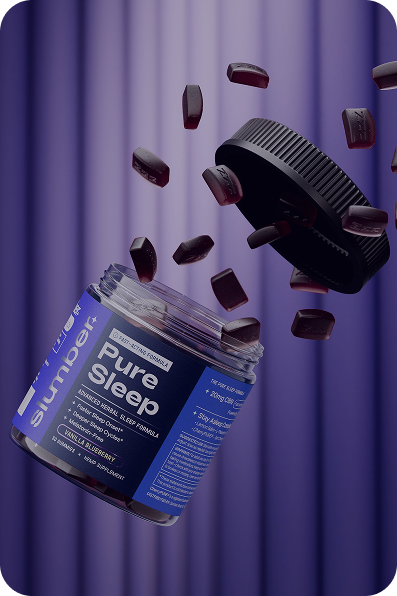
Every Slumber product is third-party tested by independent laboratories. Our Certificates of Analysis verify potency, purity, and the absence of contaminants like heavy metals, pesticides, and residual solvents.

CBN works by interacting with your endocannabinoid system (ECS).
Mostly in your brain and central nervous system.
In your immune system and peripheral organs.

This information is for educational purposes only and does not constitute legal advice. Laws regarding cannabinoids vary by jurisdiction and are subject to change.

Make the sheep count the hours you sleep.
100,000+ happy sleepers • 30-day money-back guarantee
 Lab Tested
 Made in USA
 Doctor Formulated
 30-Day Guarantee
Common side effects include drowsiness, dry mouth, and mild changes in appetite. Most effects are dose-dependent and subside within 4-6 hours. Because CBN is primarily used for sleep, drowsiness is typically the intended result rather than an adverse event.
No, not in the traditional sense. CBN is approximately 10% as potent as THC and does not produce a disorienting or intoxicating "high" at standard sleep doses (5-10mg). Instead, users typically report a deep sense of physical relaxation and sedation.
Both cannabinoids have strong safety profiles. While CBD has more extensive clinical research (including FDA-approved uses), CBN has shown no major safety concerns in recent trials. The key difference is that CBN is specifically sedative (making it better for sleep) while CBD is generally non-sedating.
CBN interacts with liver enzymes (CYP450), similar to many common drugs. A good rule of thumb: if your medication has a "Grapefruit Warning" on the bottle, it may interact with CBN. This includes certain blood thinners, benzodiazepines, and heart medications. Always consult your doctor first.
Daily use is likely safe for short durations, but long-term data is limited. To prevent tolerance (where you need more to feel the same effect), we recommend cycling your usage—for example, taking it for 5 nights and taking 2 nights off.
Possibly. Because CBN is a degradation product of THC, it has a similar chemical structure. This similarity can sometimes trigger a "false positive" on older or less sensitive urine drug screens. If your job requires strict testing, use caution.
Unlike Melatonin, which is a hormone that shifts your circadian rhythm, CBN is a cannabinoid that promotes physical relaxation. Many users prefer CBN because it avoids the vivid dreams and "hormonal grogginess" often associated with Melatonin. However, both are considered safe for short-term use.
You should never drive or operate machinery after taking CBN. Because it is a sedative, it can slow reaction times. Most users feel fully alert the next morning, but you should wait at least 8 hours after dosing before driving.
If you wake up feeling groggy, it is usually a sign that you took the dose too late (less than 8 hours before waking) or the dose was too high. Lowering your dose by 2.5mg typically eliminates this "morning fog."